


 Child Safety & CSAM Prevention Policy
The Landlords of the Cloud: Analyzing Cloud Data Center Market Share
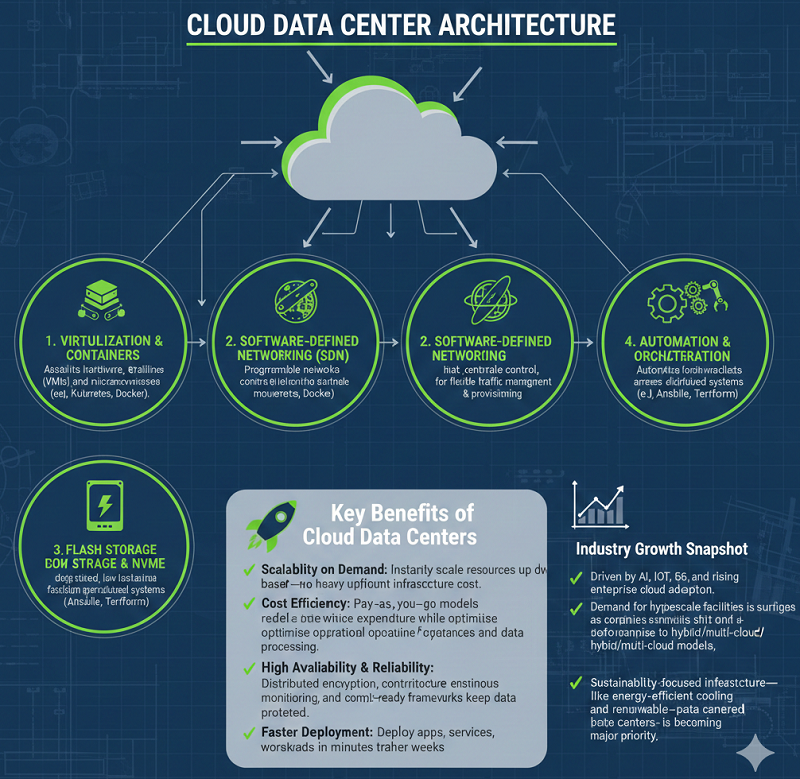
In the highly capital-intensive and strategically vital world of digital infrastructure, market share is a key indicator of a company's scale, efficiency, and ability to attract the world's largest technology tenants. A detailed analysis of the Cloud Data Center Market Share reveals a complex landscape with different leaders at different layers of the ecosystem. At the highest level, the "market share" of cloud services is dominated by a few hyperscalers. But beneath that, the market for building and operating the physical data centers is a distinct industry with its own set of major players. Understanding this distribution of influence is crucial for any business making a decision about its cloud or infrastructure strategy, as it highlights the key companies that own and operate the physical foundation of the internet.
When looking at the market share of public cloud services, which are the primary drivers of demand for new data centers, the market is a clear oligopoly. Amazon Web Services (AWS) is the long-standing market leader, holding a dominant share of the global cloud infrastructure market. Microsoft Azure is a strong and rapidly growing number two, leveraging its massive enterprise software footprint to drive cloud adoption. Google Cloud Platform (GCP) is a solid number three, competing on its strengths in data analytics, machine learning, and containerization. These three hyperscalers account for the vast majority of the public cloud market, and their relentless need to expand their global footprint to serve more customers and enter new regions is the single biggest factor driving the construction of new cloud data centers worldwide.
Beyond the hyperscalers who often build and operate their own facilities, a significant portion of the market share for data center space is held by large, publicly traded data center real estate investment trusts (REITs) and colocation providers. Companies like Digital Realty and Equinix are two of the largest data center operators in the world. Their business model is to act as a "landlord for the cloud." They build, own, and operate a global portfolio of massive data centers and then lease out space, power, and cooling to a wide range of tenants. Their customers include the major cloud providers (who often lease space from them to quickly enter a new market), as well as thousands of other enterprises, content delivery networks, and telecommunication companies. Equinix, in particular, has a dominant market share in the "interconnection" space, operating facilities that are the major traffic hubs of the internet.
Within the critical market for the hardware and infrastructure that goes inside the data centers, market share is distributed among a number of major technology vendors. In the server market, companies like Dell and HPE are major players, although a large and growing share of the market is now aken by original design manufacturers (ODMs) who build custom, no-frills servers directly for the hyperscalers. The Cloud Data Center Market Is Projected To Grow USD 84.45 Billion By 2035, Reaching at a CAGR of 10.10% During the Forecast Period 2025 - 2035. In the networking equipment space, companies like Arista Networks and Cisco are leaders. In the crucial power and cooling infrastructure segment, market share is held by industrial giants like Schneider Electric and Vertiv. The success of all these vendors is now inextricably linked to the capital expenditure cycles of the major cloud providers, who are by far their largest and most important customers.
Explore Our Latest Trending Reports:
Categories
Read More
SAN DIEGO AP)-- If this was Chris Paddack's final begin of 2019, he will certainly have finished his novice period with a fantastic efficiency that hurt the Chicago Cubs in their search of a wild-card area. Paddack pitched six solid innings as well as the San Diego Padres defeated the Cubs 4-0 Wednesday night, going down Chicago right into a connection with Milwaukee for the 2nd NL wild-card...

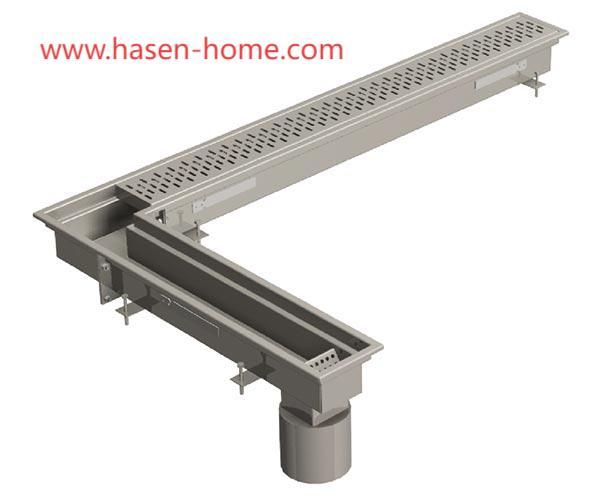
Are you searching for a reliable Shower Drainage System Factory ? At hasen-home we bring advanced stainless-steel drains that perform and endure. When a bathroom is in use, efficient water flow and odor control matter. Our factory has designed linear and square floor drains, hair filters, and anti-backflow features to meet modern needs. According to published information, our brand offers...
Just after his to start with teach with the Leafs upon Tuesday, Nic Petan stocks his pleasure for becoming a member of the business enterprise at the time the NHL's exchange initially, Nic Petan notion the NHL's exchange deadline experienced handed upon Monday afternoon, and he was shifting in direction of continue to be a member of the Winnipeg Jets, at bare minimum...

Contemporary YORK - Edmonton Oilers middle Leon Draisaitl, Tampa Bay Lightning middle Steven Stamkos and Vancouver Canucks middle J. T. Miller incorporate been referred to as the NHL's "3 Famous people" for the 7 days finishing Feb. STAR - STEVEN STAMKOS, C, TAMPA BAY LIGHTNINGTBL Stamkos pots Shattenkirk's feed against circleStamkos led the NHL inside aims and details throughout 4 game titles...

To manage the immense complexity of deploying and operating potentially millions of connected devices across the globe, a sophisticated and centralized software layer is essential. The modern Cellular M2M Market Platform is a comprehensive, cloud-based system that serves as the command and control center for an enterprise's entire IoT deployment. This platform, often called...