


 Child Safety & CSAM Prevention Policy
Rubber Conveyor Belts Market Overview Highlighting Industrial Material Handling and Transport Solutions
As Per Market Research Future, the Rubber Conveyor Belts Market is expected to experience significant growth driven by the increasing demand for efficient material handling solutions across various industries, including manufacturing, mining, and logistics. The rising focus on automation and the need for reliable conveying systems are propelling market expansion. Additionally, advancements in rubber technology are enhancing the durability and performance of conveyor belts. As industries prioritize efficiency and productivity, the rubber conveyor belts market is projected to grow considerably in the coming years.
Rubber conveyor belts are an essential component of material handling systems used across industries such as mining, cement, food processing, and logistics. These belts facilitate the efficient movement of goods, raw materials, and finished products over short or long distances. Their durability, flexibility, and resistance to wear and tear make them ideal for heavy-duty applications. With global industries increasingly focusing on operational efficiency and automated material transport, the rubber conveyor belts market is witnessing steady growth.
Market Drivers
The primary drivers of the rubber conveyor belts market include the increasing demand for bulk material handling, rising industrial automation, and the need to reduce labor costs in transport operations. The mining industry, in particular, relies heavily on conveyor belts to transport minerals over large distances efficiently. Similarly, the food and beverage sector uses conveyor systems for safe, hygienic, and continuous movement of products. The development of high-performance belts capable of handling extreme temperatures, abrasive materials, and heavy loads is further fueling market growth.
Types and Technologies
Rubber conveyor belts are available in various types, including plain belts, fabric-reinforced belts, steel cord belts, and modular belts. Plain belts are used for light material handling, while fabric-reinforced belts offer increased tensile strength for medium loads. Steel cord belts are suitable for long-distance and heavy-duty applications, whereas modular belts are preferred in food and packaging industries due to easy maintenance and hygiene standards. Technological advancements, such as rubber blends with improved durability and fire-resistant coatings, are enhancing belt performance and lifespan.
Applications Across Industries
The applications of rubber conveyor belts are vast. In mining, belts transport ore and minerals from extraction sites to processing plants. In agriculture, they facilitate the movement of grains, seeds, and fertilizers. The food processing industry relies on conveyor belts for automated production lines, reducing manual labor and improving efficiency. Logistics and warehousing sectors use conveyor systems to streamline material handling, sorting, and packaging operations. Rubber conveyor belts are also used in recycling facilities to transport waste materials for processing.
Regional Insights
The Asia-Pacific region is witnessing significant demand for rubber conveyor belts due to rapid industrialization, mining activities, and urbanization. North America and Europe maintain steady growth driven by modernization of material handling systems and technological innovations in conveyor belt materials. Latin America and the Middle East are emerging markets where infrastructure development and resource extraction projects are boosting conveyor belt adoption.
Challenges and Opportunities
The market faces challenges such as high maintenance costs, wear and tear under extreme conditions, and the need for periodic replacement. However, opportunities exist in developing belts with higher resistance to abrasion, fire, and chemicals. Environmentally friendly belts made from recycled rubber are gaining traction as sustainability becomes a priority for industries worldwide. Furthermore, smart conveyor systems integrated with sensors for real-time monitoring can reduce downtime and improve efficiency, presenting a growth avenue for the market.
Future Outlook
The rubber conveyor belts market is expected to grow steadily as industries continue to optimize operations and adopt automated material handling solutions. Continuous innovations in belt materials, energy-efficient motors, and smart monitoring technologies will expand the application of conveyor belts in new sectors. Manufacturers focusing on durability, flexibility, and low-maintenance solutions are likely to capture a significant market share in the coming years.
FAQs
Q1: What industries heavily rely on rubber conveyor belts?
Mining, food processing, logistics, agriculture, and cement industries are major users due to their need for efficient and continuous material transport.
Q2: What are the key advantages of rubber conveyor belts?
They offer durability, flexibility, resistance to wear and tear, and can handle heavy loads and extreme operating conditions efficiently.
Q3: How are rubber conveyor belts evolving technologically?
Innovations include fire-resistant coatings, chemical-resistant materials, smart sensors for monitoring, and belts made from recycled rubber for sustainability.
More Related Reports:
Animal Feed Processing Equipment Market Share
Kategorien
Mehr lesen
Market Overview The global paraneoplastic syndrome market size was valued at USD 511.24 million in 2024 and is anticipated to grow from USD 541.91 million in 2025 to reach USD 863.73 million in 2033, growing at a CAGR of 6% during the forecast period (2025–2033). The global Paraneoplastic Syndrome market is witnessing swift transformation driven by new...

The activity of inches can be brutal and unforgiving, and the Buccaneers professional that inside of finish strain Sunday night time. A botched handoff, a mistimed snap, and a unfortuitous doink helped as the hallmarks of a annoying decline as the Washington Commanders reported their to start with playoff gain within just 19 yrs with a lastsecond 2320 victory in excess of the primetime woes...
Pleasure, for the Superstars, is the scorching blanket of predictable facts and risk-free style and it was a little bit unnerving for the lads inside Victory Eco-friendly upon Friday towards be stuck inside of a tempest of hully gully hockey that grew to become Arena into a mosh pit of unpredictability. Yet in just navigating a 5-4 shootout reduction in direction of the Los Angeles Kings,...

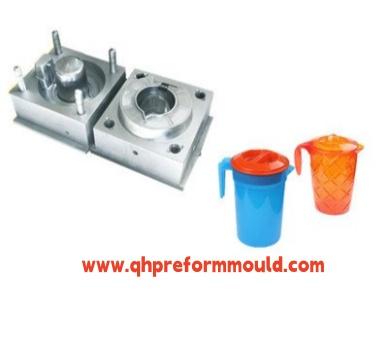
Production teams that value dependable shaping often research solutions inspired by sources such as qhpreformmould , especially when exploring Plastics Mould designs that support consistent manufacturing performance. A Plastics Mould serves as the guiding structure for shaping items with clarity and uniformity. Its quality influences the appearance of the final product and the operational...
Interest is the soil in which intelligence and knowledge grow.