What are the 4 Agile ceremonies?
There are four major Agile ceremonies that happen during every sprint cycle. Before starting each ceremony, your team members should understand the purpose of each meeting and how it impacts the sprint.
1. The sprint planning meeting
The sprint planning meeting is when the development team takes the time to plan out what work will be completed during the upcoming sprint.
This usually involves the development team, Scrum master (if your team is using Scrum), or the product owner. Sprint planning happens at the beginning of each sprint and takes approximately one hour per week of work. If your sprints commonly take place over two weeks, spring planning should take approximately two hours.
During this meeting, the product owner or Scrum master works with the development team to identify items the team will focus on for the current sprint goals. These items are traditionally pulled from the product backlog.
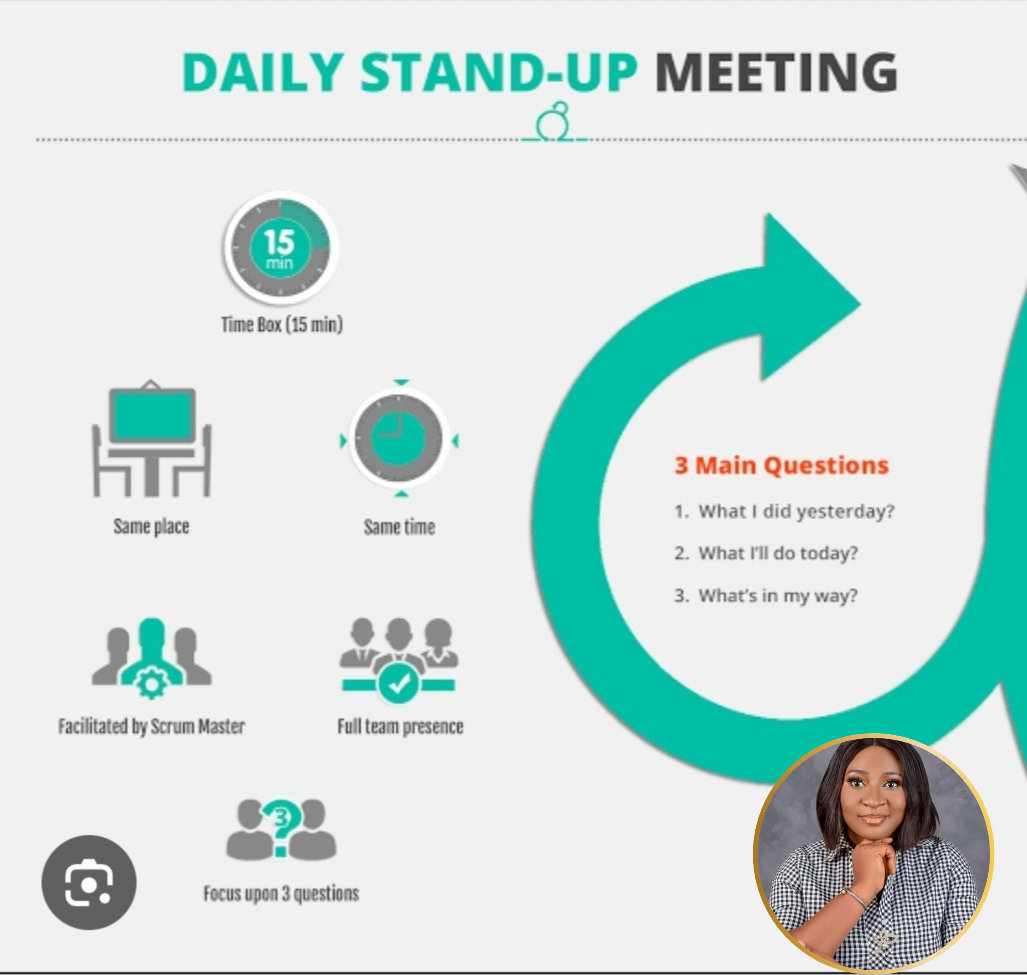
2. The daily stand-up meeting
The daily stand-up meeting is a meeting for the development team to update fellow team members on what they’re working on. It usually consist of the development team, Scrum master (if applicable), and the product owner.
It is a once per day meeting, typically at the very beginning of the work day before everyone can dive into their tasks and takes approximately 15 minutes.
Everyone on the development team, including the product owner and Scrum master, discuss three main points: what they completed yesterday, what they're working on today, and if they have any blockers in their way.
The intended goal here is for everyone on the development team to touch base with each other.
3. The sprint review meeting
The sprint review meeting is an opportunity for the development team to receive feedback from key stakeholders of a project. If there are adjustments that need to be made, the Scrum master or product manager will adjust the sprint backlog for the next sprint.
The development team, Scrum master, and product owner are all required to attend this meeting. Key stakeholders such as management or end customers are also be present during this meeting to provide feedback.
This ceremony happens at the end of the sprint when all tasks are completed, but before the sprint retrospective occurs.
The goal of this meeting is to receive feedback on the work the development team completed during this sprint.
4. The sprint retrospective meeting.
The sprint retrospective meeting is an opportunity for team members to reflect on the past sprint and think about what went well and what could be improved for next time. Anybody who actively worked on tasks throughout the sprint should attend this meeting.
This ceremony typically happens at the very end of a sprint, after a sprint review meeting. It gives the team the opportunity to reflect on what went well and what they can do better for future sprints. The goal of this ceremony is to identify key points for iteration.
Which of the above ceremonies is your favorite?
Have a great week ahead.
#BusinessAnalysis #Digiteched #ProfessionalGrowth #ProjectManagement What are the 4 Agile ceremonies?
There are four major Agile ceremonies that happen during every sprint cycle. Before starting each ceremony, your team members should understand the purpose of each meeting and how it impacts the sprint.
1. The sprint planning meeting
The sprint planning meeting is when the development team takes the time to plan out what work will be completed during the upcoming sprint.
This usually involves the development team, Scrum master (if your team is using Scrum), or the product owner. Sprint planning happens at the beginning of each sprint and takes approximately one hour per week of work. If your sprints commonly take place over two weeks, spring planning should take approximately two hours.
During this meeting, the product owner or Scrum master works with the development team to identify items the team will focus on for the current sprint goals. These items are traditionally pulled from the product backlog.
2. The daily stand-up meeting
The daily stand-up meeting is a meeting for the development team to update fellow team members on what they’re working on. It usually consist of the development team, Scrum master (if applicable), and the product owner.
It is a once per day meeting, typically at the very beginning of the work day before everyone can dive into their tasks and takes approximately 15 minutes.
Everyone on the development team, including the product owner and Scrum master, discuss three main points: what they completed yesterday, what they're working on today, and if they have any blockers in their way.
The intended goal here is for everyone on the development team to touch base with each other.
3. The sprint review meeting
The sprint review meeting is an opportunity for the development team to receive feedback from key stakeholders of a project. If there are adjustments that need to be made, the Scrum master or product manager will adjust the sprint backlog for the next sprint.
The development team, Scrum master, and product owner are all required to attend this meeting. Key stakeholders such as management or end customers are also be present during this meeting to provide feedback.
This ceremony happens at the end of the sprint when all tasks are completed, but before the sprint retrospective occurs.
The goal of this meeting is to receive feedback on the work the development team completed during this sprint.
4. The sprint retrospective meeting.
The sprint retrospective meeting is an opportunity for team members to reflect on the past sprint and think about what went well and what could be improved for next time. Anybody who actively worked on tasks throughout the sprint should attend this meeting.
This ceremony typically happens at the very end of a sprint, after a sprint review meeting. It gives the team the opportunity to reflect on what went well and what they can do better for future sprints. The goal of this ceremony is to identify key points for iteration.
Which of the above ceremonies is your favorite?
Have a great week ahead.
#BusinessAnalysis #Digiteched #ProfessionalGrowth #ProjectManagement



 Child Safety & CSAM Prevention Policy