• LinkedIn Family day 3 is here
    Navigating your way through ambiguity or challenges
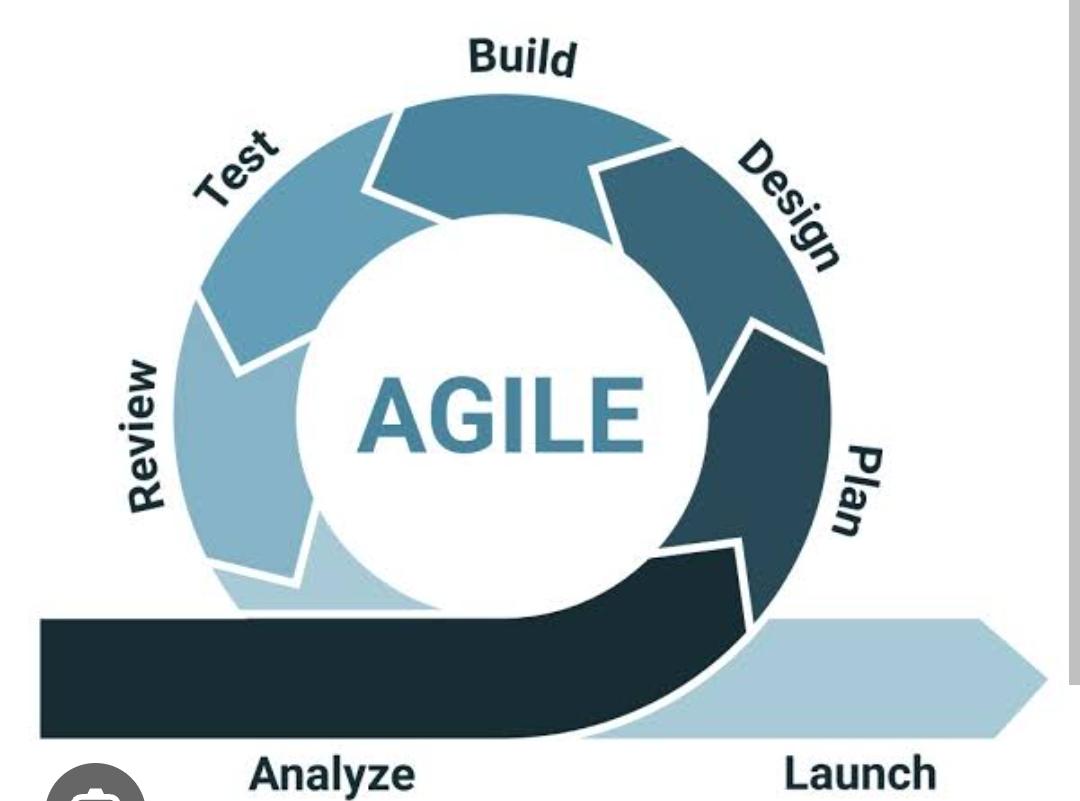
    The Power of Agile Methodologies

    Agile methodologies are well-suited for handling ambiguity.

    Agile methodology is a project management approach that emphasizes flexibility, collaboration, and customer satisfaction. Unlike traditional methods, Agile breaks down projects into smaller, iterative cycles called sprints. This allows teams to adapt to changes quickly and deliver value incrementally.

    Key strategy: Iterative Approach/ decision making process
    ✅️ Embrace iterative approaches to adapt to changing requirements.
    ✅️ Prioritize flexibility and responsiveness.
    #ProjectManager
    #Internship
    #NearersCompany
    #Scalingthroughhardtask
    LinkedIn Family day 3 is here😊💫 Navigating your way through ambiguity or challenges 👇 The Power of Agile Methodologies Agile methodologies are well-suited for handling ambiguity. Agile methodology is a project management approach that emphasizes flexibility, collaboration, and customer satisfaction. Unlike traditional methods, Agile breaks down projects into smaller, iterative cycles called sprints. This allows teams to adapt to changes quickly and deliver value incrementally. Key strategy: Iterative Approach/ decision making process ✅️ Embrace iterative approaches to adapt to changing requirements. ✅️ Prioritize flexibility and responsiveness. #ProjectManager #Internship #NearersCompany #Scalingthroughhardtask
    0 Commenti ·0 condivisioni ·1K Views ·0 Anteprima
  • Networking Tips

    Be Genuine: Build real connections.
    Listen: Show interest in others.
    Help: Offer assistance.
    Follow Up: Stay in touch.
    Be Prepared: Know your goals.

    #Networking #ProjectManagement #Leadership #Business #CareerGrowth #ProfessionalDevelopment #PMI #Agile #Scrum #ProjectManager
    Networking Tips👌 Be Genuine: Build real connections. Listen: Show interest in others. Help: Offer assistance. Follow Up: Stay in touch. Be Prepared: Know your goals. #Networking #ProjectManagement #Leadership #Business #CareerGrowth #ProfessionalDevelopment #PMI #Agile #Scrum #ProjectManager
    #Love
    2
    · 0 Commenti ·0 condivisioni ·1K Views ·0 Anteprima
  • *STORY POINTS are only for developers*


    Naaah!!

    This is just a "myth"

    Story points are often shrouded in myths and misconceptions.

    A few of which include

    Believing they measure time directly

    Assuming they are always precise

    Thinking they can be compared across teams

    Having the assumption that they are only used for software development

    Presuming they are a direct measure of progress


    What is a Story Point....

    This is a unit of measure used in Agile project management to estimate the relative effort required to fully implement a user story or a product backlog item

    It is a relative measure of complexity, efforts, and size of a task.

    In simpler terms, story points are used to estimate the difficulty, risk and complexity of a task or user story.

    The most common scale used to estimate story points is....

    The *FIBONACCI SEQUENCE*

    Named after the Italian mathematician - "Leonardo Fibonacci" in the 13th century, the Fibonacci Sequence is a series of numbers in which each number is a sum of the 2 preceeding numbers.

    Just like

    0, 1, 1, 2, 3, 5, 8, 13, 21, 34, 55, and so on...

    Where tasks with the lesser numbers are considered simple tasks while those with the higher numbers are considered complex tasks.

    ♾ Remember,

    Story points are relative and team specific so they shouldn't be compared across teams or used as direct measure of individual performance.

    Also, in as much as story points are commonly used, they are "not mandatory".

    Other methods like T-Shirt sizing or simply tracking the completed stories without assigning points can still be applied.

    I do hope you've learnt something today.

    Cheers...

    #learningiscontinuous
    #Iamanarchitectofsuccessfulprojects
    *STORY POINTS are only for developers* Naaah!! This is just a "myth" 🎓 Story points are often shrouded in myths and misconceptions. A few of which include 👉 Believing they measure time directly 👉 Assuming they are always precise 👉 Thinking they can be compared across teams 👉 Having the assumption that they are only used for software development 👉 Presuming they are a direct measure of progress 🎓 What is a Story Point.... This is a unit of measure used in Agile project management to estimate the relative effort required to fully implement a user story or a product backlog item It is a relative measure of complexity, efforts, and size of a task. 👉 In simpler terms, story points are used to estimate the difficulty, risk and complexity of a task or user story. The most common scale used to estimate story points is.... 📌The *FIBONACCI SEQUENCE* 👉 Named after the Italian mathematician - "Leonardo Fibonacci" in the 13th century, the Fibonacci Sequence is a series of numbers in which each number is a sum of the 2 preceeding numbers. Just like 👉 0, 1, 1, 2, 3, 5, 8, 13, 21, 34, 55, and so on... Where tasks with the lesser numbers are considered simple tasks while those with the higher numbers are considered complex tasks. ♾ Remember, 👉 Story points are relative and team specific so they shouldn't be compared across teams or used as direct measure of individual performance. 👉 Also, in as much as story points are commonly used, they are "not mandatory". 📌 Other methods like T-Shirt sizing or simply tracking the completed stories without assigning points can still be applied. I do hope you've learnt something today. Cheers... #learningiscontinuous #Iamanarchitectofsuccessfulprojects
    #Chant
    #Love
    3
    · 0 Commenti ·0 condivisioni ·593 Views ·0 Anteprima
  • Dear Project Managers,

    Any knowledge worth having, is worth having correctly.


    There is a very popular norm that goes on in the field of project management, and this is it****

    ♾ People interchangeably use Agile and Scrum.

    Now here is the reality~~


    Agile is a foundational philosophy and mindset. It's safe to say it's a methodology.

    Scrum on the other hand is a framework that brings this philosophy to life.

    Asides from Scrum, Agile methodology has other types of framework in existence.

    These include ~
    ▪︎Kanban
    ▪︎Lean and
    ▪︎Extreme Programming (XP)

    Scrum gained so much popularity and that led to it being used interchangeably.

    Take Home

    A NORM IS NOT ALWAYS A STANDARD ~~

    I do hope you've learnt something today

    Kindly share to others as no knowledge is a waste.

    Cheers...
    Dear Project Managers, 🎓Any knowledge worth having, is worth having correctly. There is a very popular norm that goes on in the field of project management, and this is it**** ♾ People interchangeably use Agile and Scrum. Now here is the reality~~ 📌 Agile is a foundational philosophy and mindset. It's safe to say it's a methodology. 📌 Scrum on the other hand is a framework that brings this philosophy to life. 📌 Asides from Scrum, Agile methodology has other types of framework in existence. These include ~ ▪︎Kanban ▪︎Lean and ▪︎Extreme Programming (XP) 📌 Scrum gained so much popularity and that led to it being used interchangeably. 👉 Take Home A NORM IS NOT ALWAYS A STANDARD ~~ I do hope you've learnt something today🙂 Kindly share to others as no knowledge is a waste. Cheers...
    #Chant
    #Love
    5
    · 0 Commenti ·0 condivisioni ·479 Views ·0 Anteprima

  • Day 1 of my Project Management and Business Analysis Boot Camp journey!

    I'm excited to share my journey with you all as I learn and grow in my skills. Over the next six weeks, I'll be diving into the world of project management and business analysis, and I can't wait to share my experiences, insights, and takeaways with you.

    From learning about Agile methodologies to mastering project planning and execution, I'll be documenting my progress every step of the way. Stay tuned for:

    Project management tips and tricks
    Business analysis best practices
    Lessons learned and challenges overcome
    Networking opportunities and connections made
    And more!

    Join me on this journey as I transform my skills and knowledge. Let's grow together! #ProjectManagement #BusinessAnalysis #BootCamp #LearningJourney#
    Day 1 of my Project Management and Business Analysis Boot Camp journey! I'm excited to share my journey with you all as I learn and grow in my skills. Over the next six weeks, I'll be diving into the world of project management and business analysis, and I can't wait to share my experiences, insights, and takeaways with you. From learning about Agile methodologies to mastering project planning and execution, I'll be documenting my progress every step of the way. Stay tuned for: Project management tips and tricks Business analysis best practices Lessons learned and challenges overcome Networking opportunities and connections made And more! Join me on this journey as I transform my skills and knowledge. Let's grow together! #ProjectManagement #BusinessAnalysis #BootCamp #LearningJourney#
    #Chant
    #Love
    8
    · 0 Commenti ·0 condivisioni ·1K Views ·0 Anteprima
  • What are the 4 Agile ceremonies?

    There are four major Agile ceremonies that happen during every sprint cycle. Before starting each ceremony, your team members should understand the purpose of each meeting and how it impacts the sprint.

    1. The sprint planning meeting
    The sprint planning meeting is when the development team takes the time to plan out what work will be completed during the upcoming sprint.
    This usually involves the development team, Scrum master (if your team is using Scrum), or the product owner. Sprint planning happens at the beginning of each sprint and takes approximately one hour per week of work. If your sprints commonly take place over two weeks, spring planning should take approximately two hours.
    During this meeting, the product owner or Scrum master works with the development team to identify items the team will focus on for the current sprint goals. These items are traditionally pulled from the product backlog.

    2. The daily stand-up meeting
    The daily stand-up meeting is a meeting for the development team to update fellow team members on what they’re working on. It usually consist of the development team, Scrum master (if applicable), and the product owner.
    It is a once per day meeting, typically at the very beginning of the work day before everyone can dive into their tasks and takes approximately 15 minutes.
    Everyone on the development team, including the product owner and Scrum master, discuss three main points: what they completed yesterday, what they're working on today, and if they have any blockers in their way.
    The intended goal here is for everyone on the development team to touch base with each other.

    3. The sprint review meeting
    The sprint review meeting is an opportunity for the development team to receive feedback from key stakeholders of a project. If there are adjustments that need to be made, the Scrum master or product manager will adjust the sprint backlog for the next sprint.
    The development team, Scrum master, and product owner are all required to attend this meeting. Key stakeholders such as management or end customers are also be present during this meeting to provide feedback.
    This ceremony happens at the end of the sprint when all tasks are completed, but before the sprint retrospective occurs.
    The goal of this meeting is to receive feedback on the work the development team completed during this sprint.

    4. The sprint retrospective meeting.
    The sprint retrospective meeting is an opportunity for team members to reflect on the past sprint and think about what went well and what could be improved for next time. Anybody who actively worked on tasks throughout the sprint should attend this meeting.
    This ceremony typically happens at the very end of a sprint, after a sprint review meeting. It gives the team the opportunity to reflect on what went well and what they can do better for future sprints. The goal of this ceremony is to identify key points for iteration.

    Which of the above ceremonies is your favorite?
    Have a great week ahead.

    #BusinessAnalysis #Digiteched #ProfessionalGrowth #ProjectManagement

    What are the 4 Agile ceremonies? There are four major Agile ceremonies that happen during every sprint cycle. Before starting each ceremony, your team members should understand the purpose of each meeting and how it impacts the sprint. 1. The sprint planning meeting The sprint planning meeting is when the development team takes the time to plan out what work will be completed during the upcoming sprint. This usually involves the development team, Scrum master (if your team is using Scrum), or the product owner. Sprint planning happens at the beginning of each sprint and takes approximately one hour per week of work. If your sprints commonly take place over two weeks, spring planning should take approximately two hours. During this meeting, the product owner or Scrum master works with the development team to identify items the team will focus on for the current sprint goals. These items are traditionally pulled from the product backlog. 2. The daily stand-up meeting The daily stand-up meeting is a meeting for the development team to update fellow team members on what they’re working on. It usually consist of the development team, Scrum master (if applicable), and the product owner. It is a once per day meeting, typically at the very beginning of the work day before everyone can dive into their tasks and takes approximately 15 minutes. Everyone on the development team, including the product owner and Scrum master, discuss three main points: what they completed yesterday, what they're working on today, and if they have any blockers in their way. The intended goal here is for everyone on the development team to touch base with each other. 3. The sprint review meeting The sprint review meeting is an opportunity for the development team to receive feedback from key stakeholders of a project. If there are adjustments that need to be made, the Scrum master or product manager will adjust the sprint backlog for the next sprint. The development team, Scrum master, and product owner are all required to attend this meeting. Key stakeholders such as management or end customers are also be present during this meeting to provide feedback. This ceremony happens at the end of the sprint when all tasks are completed, but before the sprint retrospective occurs. The goal of this meeting is to receive feedback on the work the development team completed during this sprint. 4. The sprint retrospective meeting. The sprint retrospective meeting is an opportunity for team members to reflect on the past sprint and think about what went well and what could be improved for next time. Anybody who actively worked on tasks throughout the sprint should attend this meeting. This ceremony typically happens at the very end of a sprint, after a sprint review meeting. It gives the team the opportunity to reflect on what went well and what they can do better for future sprints. The goal of this ceremony is to identify key points for iteration. Which of the above ceremonies is your favorite? Have a great week ahead. #BusinessAnalysis #Digiteched #ProfessionalGrowth #ProjectManagement

    #Chant
    #Love
    6
    · 1 Commenti ·0 condivisioni ·1K Views ·0 Anteprima
ChantUp https://chantup.com