• Ready to conquer challenges or ambiguity? Join me this week as we explore practical project management solutions. Stay tuned Day 1.

    Embracing Ambiguity in Project Management
    ●●●●●●●●●●●●●●●●●●●●●●●●●●●●●●●●●●●
    Ambiguity can be a daunting challenge in project management. However, it can also lead to innovative solutions and unexpected opportunities.

    Key strategy: Effective Communication A LIFE SAVER.
    ️ Clearly articulate expectations and deliverables.
    ✅️ Encourage open and honest communication.
    ✅ ️Actively listen to team members and stakeholders.

    Stay tuned
    #Internship
    #projectmanager #teamwork #Nearers
    Ready to conquer challenges or ambiguity?😎 Join me this week as we explore practical project management solutions. Stay tuned Day 1.👌👇 Embracing Ambiguity in Project Management ●●●●●●●●●●●●●●●●●●●●●●●●●●●●●●●●●●● Ambiguity can be a daunting challenge in project management. However, it can also lead to innovative solutions and unexpected opportunities. Key strategy: Effective Communication A LIFE SAVER. ✅️ Clearly articulate expectations and deliverables. ✅️ Encourage open and honest communication. ✅ ️Actively listen to team members and stakeholders. Stay tuned 😊 #Internship #projectmanager #teamwork #Nearers
    #Chant
    1
    · 0 Комментарии ·0 Поделились ·1Кб Просмотры ·0 предпросмотр
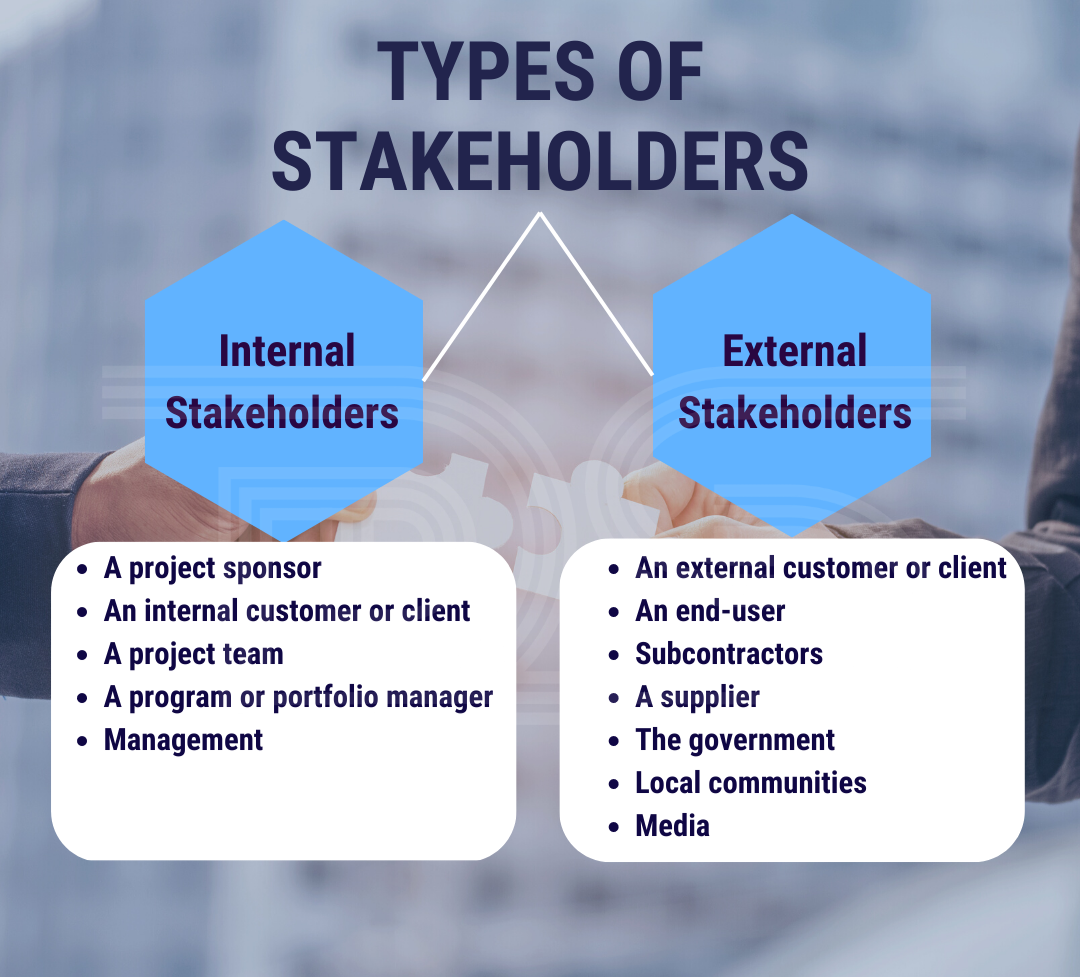
  • One of the most important activities that a project manager can carry out is dealing with stakeholders.

    ‘Stakeholder’ is the term used in most instances to refer to individuals or groups who have an interest or role in the project, programme or portfolio, or are impacted by it (APM, 2019). They are those who have a stake or an interest in a project or strategy undertaken by a company or an organisation.

    Stakeholders can be project team members, sponsors, or people who are not directly involved in delivering the project but have an interest in it.

    Some of the typical key project stakeholders you will find in a project may include:
    - Customers
    - Project manager
    - Project team members
    - Project sponsor
    - Steering committee
    - Executives
    - Resource managers
    - Sellers/suppliers
    - Contractors
    - Government agencies,
    - Media outlets

    You can identify stakeholders and analyse how far they may help or hinder a project by creating a stakeholder map, carrying out stakeholder analysis, and monitoring their activities throughout the course of a project.

    Stakeholders have the power to make or break the project. Even if all deliverables are in and budgets are met, if the stakeholders aren't happy, the project can not be considered a success which is why it is essential to identify all stakeholders and classify them according to their interest and power that they can have in the project, practice good stakeholder analysis, management and to continuously communicate and collaborate with them throughout the life cycle of a project.
    One of the most important activities that a project manager can carry out is dealing with stakeholders. ‘Stakeholder’ is the term used in most instances to refer to individuals or groups who have an interest or role in the project, programme or portfolio, or are impacted by it (APM, 2019). They are those who have a stake or an interest in a project or strategy undertaken by a company or an organisation. Stakeholders can be project team members, sponsors, or people who are not directly involved in delivering the project but have an interest in it. Some of the typical key project stakeholders you will find in a project may include: - Customers - Project manager - Project team members - Project sponsor - Steering committee - Executives - Resource managers - Sellers/suppliers - Contractors - Government agencies, - Media outlets You can identify stakeholders and analyse how far they may help or hinder a project by creating a stakeholder map, carrying out stakeholder analysis, and monitoring their activities throughout the course of a project. Stakeholders have the power to make or break the project. Even if all deliverables are in and budgets are met, if the stakeholders aren't happy, the project can not be considered a success which is why it is essential to identify all stakeholders and classify them according to their interest and power that they can have in the project, practice good stakeholder analysis, management and to continuously communicate and collaborate with them throughout the life cycle of a project.
    #Chant
    #Love
    12
    · 2 Комментарии ·0 Поделились ·403 Просмотры ·0 предпросмотр
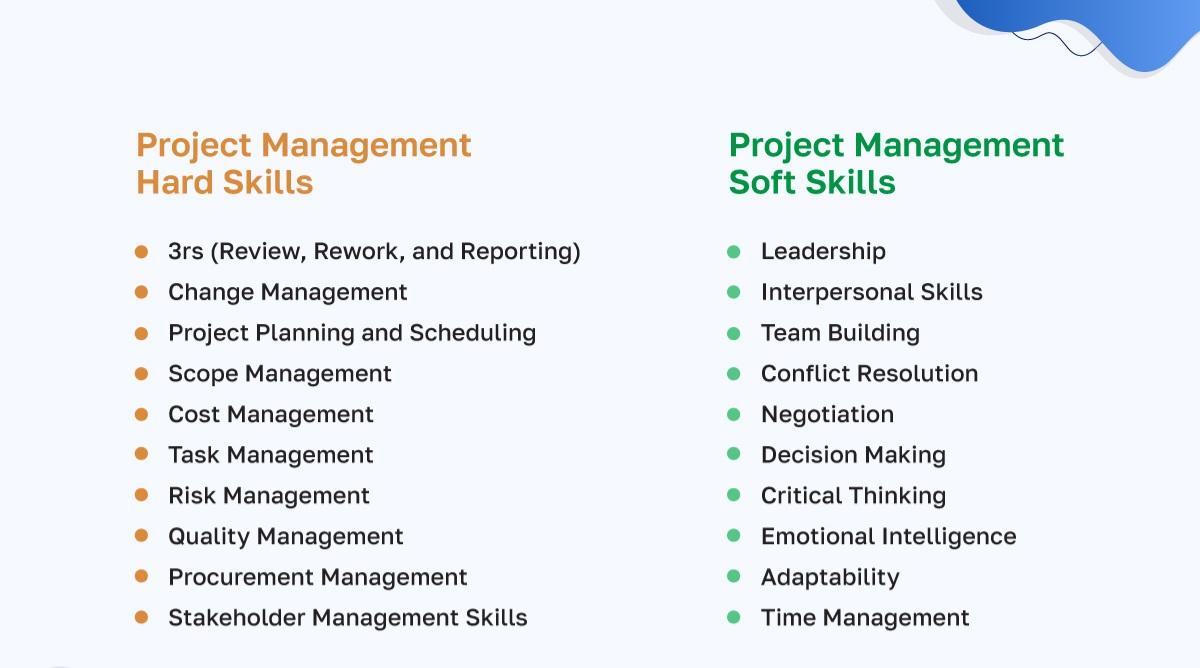
  • Project management skills are the core abilities necessary to complete a project from start to finish. Project management skills are a combination of technical skills like risk management and interpersonal skills like communication and motivation. Project management skills can have a direct impact on the team's ability to complete an assignment. Thinking of the soft skills one needs to be an effective project manager, I believe we need to develop the following skills:

    1. Leadership: Strong leadership skills are critical for project managers. How leaders oversee, coordinate, and motivate their team members determines the success of a project. A project manager manages not only tasks but also people.

    2. Communication: Effective interaction with stakeholders through various methods and forms, including online collaboration.

    3. Negotiation:Reaching mutually beneficial agreements and managing collaborations.

    4. Time Management: Prioritizing tasks and planning projects to minimize risks.

    5. Knowledge of the Regulatory Environment: Understanding relevant laws, norms, and standards impacting the project. Also, adhering to professional codes of conduct and resolving ethical dilemmas.

    6. Continuing Professional Development: Engaging in ongoing education and professional growth through courses, research, and new work experiences because things continue to change and evolve.

    What Soft skills do you currently have and which ones would you want to develop as a PM?
    Project management skills are the core abilities necessary to complete a project from start to finish. Project management skills are a combination of technical skills like risk management and interpersonal skills like communication and motivation. Project management skills can have a direct impact on the team's ability to complete an assignment. Thinking of the soft skills one needs to be an effective project manager, I believe we need to develop the following skills: 1. Leadership: Strong leadership skills are critical for project managers. How leaders oversee, coordinate, and motivate their team members determines the success of a project. A project manager manages not only tasks but also people. 2. Communication: Effective interaction with stakeholders through various methods and forms, including online collaboration. 3. Negotiation:Reaching mutually beneficial agreements and managing collaborations. 4. Time Management: Prioritizing tasks and planning projects to minimize risks. 5. Knowledge of the Regulatory Environment: Understanding relevant laws, norms, and standards impacting the project. Also, adhering to professional codes of conduct and resolving ethical dilemmas. 6. Continuing Professional Development: Engaging in ongoing education and professional growth through courses, research, and new work experiences because things continue to change and evolve. What Soft skills do you currently have and which ones would you want to develop as a PM?
    #Love
    #Chant
    21
    · 8 Комментарии ·1 Поделились ·338 Просмотры ·0 предпросмотр
  • "Today, we delved into the fascinating topic of stakeholders in our project management class.
    Who are Stakeholders? Stakeholders are the individuals or groups who have a vested interest in our project's success.
    By identifying stakeholders early on, we can engage them in the project, address their concerns, and leverage their expertise. This helps in building strong relationships and gaining their support throughout the project lifecycle. Effective stakeholder management leads to improved communication, reduced risks, and increased stakeholder satisfaction.

    What are your thoughts on stakeholder management? Share your experiences and insights in the comments below!"

    #projectmanagement #stakeholders

    "Today, we delved into the fascinating topic of stakeholders in our project management class. Who are Stakeholders? Stakeholders are the individuals or groups who have a vested interest in our project's success. By identifying stakeholders early on, we can engage them in the project, address their concerns, and leverage their expertise. This helps in building strong relationships and gaining their support throughout the project lifecycle. Effective stakeholder management leads to improved communication, reduced risks, and increased stakeholder satisfaction. What are your thoughts on stakeholder management? Share your experiences and insights in the comments below!" #projectmanagement #stakeholders
    #Chant
    #Love
    5
    · 1 Комментарии ·0 Поделились ·346 Просмотры ·0 предпросмотр
  • Tonight's class was simply amazing. Stakeholders Analysis well explained. Thank you @Mr Charles UGWU PM/BA @DTBS for such detailed and explanatory class. The way you break down complex concepts into simple, down-to-earth explanations using common examples around us is just so superb. Kudos to you sir. God bless you 
    Tonight's class was simply amazing. Stakeholders Analysis well explained. Thank you @Mr Charles UGWU PM/BA @DTBS for such detailed and explanatory class. The way you break down complex concepts into simple, down-to-earth explanations using common examples around us is just so superb. Kudos to you sir. God bless you 🙏
    #Chant
    #Love
    12
    · 3 Комментарии ·0 Поделились ·472 Просмотры ·0 предпросмотр
  • To be successful as a Project Manager, stakeholders analysis is something to take very seriously. Identifying and understanding stakeholders is a key technique to a successful project. What's your thought about this
    To be successful as a Project Manager, stakeholders analysis is something to take very seriously. Identifying and understanding stakeholders is a key technique to a successful project. What's your thought about this
    #Chant
    #Love
    5
    · 2 Комментарии ·0 Поделились ·200 Просмотры ·0 предпросмотр
  • Day 1: PM/BA Training Journey

    Project Management Class 1( summary)

    Topics: 1) The Core Principles of Project Management
    2) The different roles in Project Management.

    Project management revolves around these constraints ( Timeline, Scope &Budget).
    Timeline: Is the duration of the project. The time allocated for the completion of a particular project.

    Scope: Is the area expected to cover for the project

    Budget: Is the managing of the financial aspects of the project.

    Importance of Project Management
    1, plays a crucial role in ensuring the achievement of project goals in an organization.

    2, Optimizing the allocation of resources to maximize efficiency and minimize costs.

    3,Facilitating effective communication and collaboration among stakeholders.

    4, Mitigating risks and addressing challenges proactively to minimize disruption or project failures.

    5, Providing a structured approach to project execution, leading to effective and improved project outcomes and customer satisfaction.

    Key Concepts and Terminologies

    1, Projects: Temporal endeavors undertaken to produce unique results, outcomes, products and services.

    2, Project management: Application of knowledge, skills, tools and techniques to project activities to meet project requirements.

    3, Triple Constraints:(Time, Scope, Cost) Managing these constraints are essential for project to be successful.

    4, Stakeholders: People that are interested in the project success, they contribute in one way or the other to the project and they have impact on the project.

    5,Project Manager: The individual responsible for the project as a whole, (The captain of the project)

    Project Roles

    Leader: The project manager is responsible for planning,execution and delivery of the project.

    Project Team members : People with specific skills, knowledge and expertise that contribute to the project.

    Stakeholders: Are individuals/ groups that are affected by the project or with interest in the outcome of the project eg, Sponsors,clients and end users.

    Two types: (Internal and external stakeholders)
    End user: the people that makes use of the project for their business, work or daily lives.
    Sponsors: They provide the financial resources for the project.

    Professional Career Roles in Project Management

    1,Project Manager:
    Over seeing the entire project lifecycle.

    2, Project Coordinator:
    Assists the project manager.

    3,Project Scheduler/Planner:
    Develops and maintains project schedules, timelines and milestones.

    4,Business Analysts:
    Identify project requirements, gather, analyze data and develop business case and project charter.

    5,Risk Managers:
    They identifies the risks and develops mitigation strategies and risk management plans.

    6,Quality Assurance Managers:
    The standard of the project outputs is accessed by them. They make sure that the project meet the quality, standards or the expectations of the client or company.

    7,Change Management Specialist:
    They facilitate organizational change, initiate change related to project and implementation by accessing the impacts of the change and also addressing resistance to change.

    8,Project Management Office(PMO) Manager:
    They oversee all the projects going on in an organization (They monitor what is going on within various projects, just like police of project management).

    In Conclusion: Project Management is the discipline that drives success in an organization across all industries.


    @followers
    @everyone
    Day 1: PM/BA Training Journey Project Management Class 1( summary) Topics: 1) The Core Principles of Project Management 2) The different roles in Project Management. Project management revolves around these constraints ( Timeline, Scope &Budget). Timeline: Is the duration of the project. The time allocated for the completion of a particular project. Scope: Is the area expected to cover for the project Budget: Is the managing of the financial aspects of the project. Importance of Project Management 1, plays a crucial role in ensuring the achievement of project goals in an organization. 2, Optimizing the allocation of resources to maximize efficiency and minimize costs. 3,Facilitating effective communication and collaboration among stakeholders. 4, Mitigating risks and addressing challenges proactively to minimize disruption or project failures. 5, Providing a structured approach to project execution, leading to effective and improved project outcomes and customer satisfaction. Key Concepts and Terminologies 1, Projects: Temporal endeavors undertaken to produce unique results, outcomes, products and services. 2, Project management: Application of knowledge, skills, tools and techniques to project activities to meet project requirements. 3, Triple Constraints:(Time, Scope, Cost) Managing these constraints are essential for project to be successful. 4, Stakeholders: People that are interested in the project success, they contribute in one way or the other to the project and they have impact on the project. 5,Project Manager: The individual responsible for the project as a whole, (The captain of the project) Project Roles Leader: The project manager is responsible for planning,execution and delivery of the project. Project Team members : People with specific skills, knowledge and expertise that contribute to the project. Stakeholders: Are individuals/ groups that are affected by the project or with interest in the outcome of the project eg, Sponsors,clients and end users. Two types: (Internal and external stakeholders) End user: the people that makes use of the project for their business, work or daily lives. Sponsors: They provide the financial resources for the project. Professional Career Roles in Project Management 1,Project Manager: Over seeing the entire project lifecycle. 2, Project Coordinator: Assists the project manager. 3,Project Scheduler/Planner: Develops and maintains project schedules, timelines and milestones. 4,Business Analysts: Identify project requirements, gather, analyze data and develop business case and project charter. 5,Risk Managers: They identifies the risks and develops mitigation strategies and risk management plans. 6,Quality Assurance Managers: The standard of the project outputs is accessed by them. They make sure that the project meet the quality, standards or the expectations of the client or company. 7,Change Management Specialist: They facilitate organizational change, initiate change related to project and implementation by accessing the impacts of the change and also addressing resistance to change. 8,Project Management Office(PMO) Manager: They oversee all the projects going on in an organization (They monitor what is going on within various projects, just like police of project management). In Conclusion: Project Management is the discipline that drives success in an organization across all industries. 👍🤝🖐️🙌 @followers @everyone

    #Love
    #Chant
    10
    · 1 Комментарии ·0 Поделились ·605 Просмотры ·0 предпросмотр
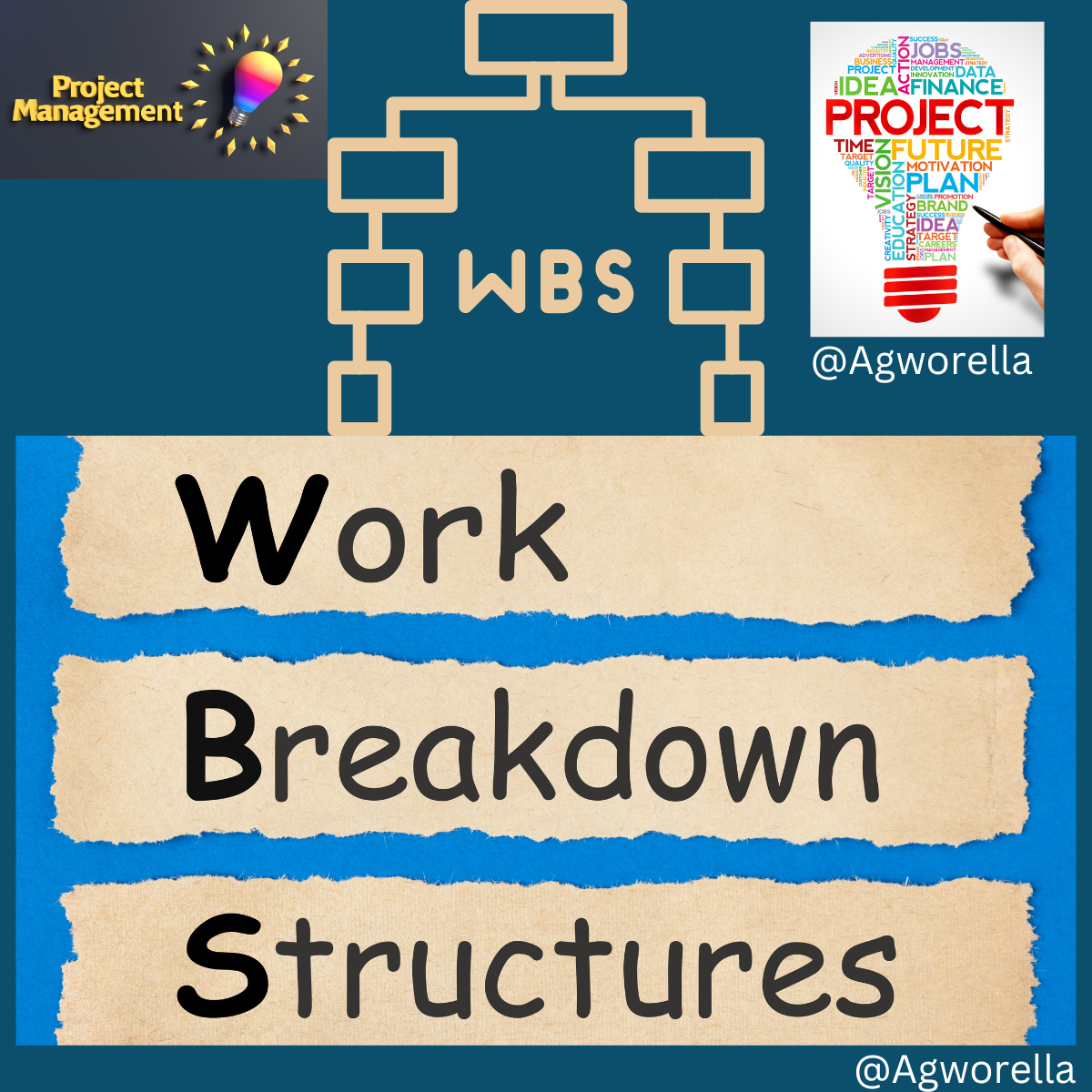
  • Understanding the Work Breakdown Structure (WBS) in Project Management!

    Today, let's touchlight one of the cornerstone documents in project management—the Work Breakdown Structure (WBS).

    A WBS is essentially a detailed blueprint, breaking down all the work needed to achieve the project deliverables into manageable sections.
    Here's what a typical WBS should consist:

    1. Initiation Phase: This phase includes:
    - Evaluation: Assessing project feasibility and requirements.
    - Charter: Formalizing the project's purpose and objectives.

    2. Planning Phase: Key components are:
    - Scope Statement: Defining the project scope and boundaries.
    - Project Team: Assembling the team to execute the project.
    - Plan Schedule: Outlining the timeline and key milestones.
    - Budget: Estimating costs and securing funding.

    3. Execution Phase: Where the action happens, including:
    - Lay Foundation: Preparing the base for the project.
    - Excavate and Pour Concrete: Core construction activities.
    - Interior Work: Encompassing, Electrical and Plumbing tasks.
    - Exterior Work: Final touches to complete the project.

    4. Control Phase: Ensuring the project stays on track by managing:
    - Resource Management: Allocating and utilizing resources efficiently.
    - Cost Management: Keeping the project within budget.
    - Risk Management: Identifying and mitigating potential risks.

    5. Closeout Phase: Wrapping up the project with:
    - Audit: Reviewing and assessing the project outcomes.
    - Site Cleanup: Ensuring the project site is left in good condition.
    - Document Handover: Transferring all essential documents to stakeholders.

    A WBS not only helps in organizing the project tasks but also ensures every detail is accounted for, leading to a successful project delivery.

    How do you utilize WBS in your projects? Share your thoughts and experiences in the comments!

    #ProjectManagement #WBS #WorkBreakdownStructure #PMI #ProjectPlanning #Execution #Control #ProjectCloseout #thebeeprojectmanager #agworellaspeaks

    Understanding the Work Breakdown Structure (WBS) in Project Management! Today, let's touchlight one of the cornerstone documents in project management—the Work Breakdown Structure (WBS). A WBS is essentially a detailed blueprint, breaking down all the work needed to achieve the project deliverables into manageable sections. Here's what a typical WBS should consist: 1. Initiation Phase: This phase includes: - Evaluation: Assessing project feasibility and requirements. - Charter: Formalizing the project's purpose and objectives. 2. Planning Phase: Key components are: - Scope Statement: Defining the project scope and boundaries. - Project Team: Assembling the team to execute the project. - Plan Schedule: Outlining the timeline and key milestones. - Budget: Estimating costs and securing funding. 3. Execution Phase: Where the action happens, including: - Lay Foundation: Preparing the base for the project. - Excavate and Pour Concrete: Core construction activities. - Interior Work: Encompassing, Electrical and Plumbing tasks. - Exterior Work: Final touches to complete the project. 4. Control Phase: Ensuring the project stays on track by managing: - Resource Management: Allocating and utilizing resources efficiently. - Cost Management: Keeping the project within budget. - Risk Management: Identifying and mitigating potential risks. 5. Closeout Phase: Wrapping up the project with: - Audit: Reviewing and assessing the project outcomes. - Site Cleanup: Ensuring the project site is left in good condition. - Document Handover: Transferring all essential documents to stakeholders. A WBS not only helps in organizing the project tasks but also ensures every detail is accounted for, leading to a successful project delivery. How do you utilize WBS in your projects? Share your thoughts and experiences in the comments! 👇 #ProjectManagement #WBS #WorkBreakdownStructure #PMI #ProjectPlanning #Execution #Control #ProjectCloseout #thebeeprojectmanager #agworellaspeaks
    #Love
    #Chant
    3
    · 0 Комментарии ·0 Поделились ·852 Просмотры ·0 предпросмотр
  • Hello people, how has your week been? Mine has been interesting.

    So today let's look at the core principles of project management.

    The PMI has established 12 guiding principles that are to guiding concepts for every project. These principles provide the framework for project managers to effectively plan, execute and deliver successful projects.


    Chapter 1: Stewardship

    -Responsible and trustworthy conduct in project activities

    -Broad commitment to financial, social, and environmental impacts

    -Holistic view considering integrity, care, trustworthiness, and compliance


    Chapter 2: Team Leadership

    -Collaborative project teams achieve shared objectives efficiently

    -Alignment with organizational cultures and guidelines

    -Promote individual and team learning and development


    Chapter 3: Stakeholder Engagement

    -Proactive engagement to contribute to project success

    -Stakeholders' influence on projects and outcomes 🗝

    -Proactive advancement of value delivery through engagement


    Chapter 4: Value

    -Continual evaluation and adjustment of project alignment

    -Focus on quantitative and qualitative outcomes

    -Support intended benefits for value creation


    Chapter 5: Systems Thinking

    -Recognition and response to dynamic project circumstances

    -Holistic view of project parts and interactions

    -Constant attention to internal and external conditions


    Chapter 6: Leadership

    -Adaptation of leadership behaviors to support individual and team needs

    -Recognition that effective leadership goes beyond authority

    -Demonstration of desired behavior in honesty, integrity, and ethical conduct


    Chapter 7: Tailoring

    -Designing project development approach based on project context and objectives

    -Maximizing value, managing costs, and enhancing speed

    -Continuous process of tailoring throughout the project lifecycle


    Chapter 8: Quality

    -Focus on deliverables meeting project objectives

    -Fulfill stakeholders' needs and acceptance requirements

    -Ensuring appropriate and effective project processes


    Chapter 9: Complexity

    -Continual evaluation and navigation of project complexity

    -Recognition of human behavior, system interactions, uncertainty, and ambiguity

    -Vigilance in identifying and mitigating elements of complexity


    Chapter 10: Risk Management ⚠

    -Continual evaluation of risks (opportunities and threats)

    -Address risks throughout the project

    -Appropriate, cost-effective, and realistic risk responses


    Chapter 11: Adaptability and Resiliency

    -Build adaptability and resiliency into approaches 🏗

    -Ability to respond to changing conditions

    -Absorb impacts and recover quickly from setbacks


    Chapter 12: Change

    -Structured approach to change management for successful transitions

    -Recognition of internal and external sources of change

    -Stakeholder engagement and motivational approaches for change adoption
    Hello people, how has your week been? Mine has been interesting. So today let's look at the core principles of project management. The PMI has established 12 guiding principles that are to guiding concepts for every project. These principles provide the framework for project managers to effectively plan, execute and deliver successful projects. Chapter 1: Stewardship 🌱 -Responsible and trustworthy conduct in project activities ✅ -Broad commitment to financial, social, and environmental impacts 🌍 -Holistic view considering integrity, care, trustworthiness, and compliance 👥 Chapter 2: Team Leadership 👥 -Collaborative project teams achieve shared objectives efficiently 🤝 -Alignment with organizational cultures and guidelines 🌐 -Promote individual and team learning and development 📚 Chapter 3: Stakeholder Engagement 👥🔑 -Proactive engagement to contribute to project success 💪 -Stakeholders' influence on projects and outcomes 🗝 -Proactive advancement of value delivery through engagement 📈 Chapter 4: Value 💎 -Continual evaluation and adjustment of project alignment 🔄 -Focus on quantitative and qualitative outcomes 📊 -Support intended benefits for value creation 💡 Chapter 5: Systems Thinking 🌐 -Recognition and response to dynamic project circumstances 🔄 -Holistic view of project parts and interactions 🧩 -Constant attention to internal and external conditions 🌍 Chapter 6: Leadership 👤 -Adaptation of leadership behaviors to support individual and team needs 🔄 -Recognition that effective leadership goes beyond authority 🌟 -Demonstration of desired behavior in honesty, integrity, and ethical conduct ✨ Chapter 7: Tailoring 🧵 -Designing project development approach based on project context and objectives 📐 -Maximizing value, managing costs, and enhancing speed ⏱️ -Continuous process of tailoring throughout the project lifecycle 🔁 Chapter 8: Quality ✅ -Focus on deliverables meeting project objectives 🎯✅ -Fulfill stakeholders' needs and acceptance requirements 👥 -Ensuring appropriate and effective project processes ✅🔧 Chapter 9: Complexity 🧩 -Continual evaluation and navigation of project complexity 🔄 -Recognition of human behavior, system interactions, uncertainty, and ambiguity 🤔 -Vigilance in identifying and mitigating elements of complexity 🚧 Chapter 10: Risk Management ⚠ -Continual evaluation of risks (opportunities and threats) 📉🚀 -Address risks throughout the project 🎯 -Appropriate, cost-effective, and realistic risk responses 💡💰 Chapter 11: Adaptability and Resiliency 🔄 -Build adaptability and resiliency into approaches 🏗 -Ability to respond to changing conditions 🔄 -Absorb impacts and recover quickly from setbacks 🌱🔁 Chapter 12: Change 🔄 -Structured approach to change management for successful transitions 🔄 -Recognition of internal and external sources of change 🔄🔍 -Stakeholder engagement and motivational approaches for change adoption 🤝
    #Chant
    #Love
    6
    · 0 Комментарии ·0 Поделились ·462 Просмотры ·0 предпросмотр
  • What are the 4 Agile ceremonies?

    There are four major Agile ceremonies that happen during every sprint cycle. Before starting each ceremony, your team members should understand the purpose of each meeting and how it impacts the sprint.

    1. The sprint planning meeting
    The sprint planning meeting is when the development team takes the time to plan out what work will be completed during the upcoming sprint.
    This usually involves the development team, Scrum master (if your team is using Scrum), or the product owner. Sprint planning happens at the beginning of each sprint and takes approximately one hour per week of work. If your sprints commonly take place over two weeks, spring planning should take approximately two hours.
    During this meeting, the product owner or Scrum master works with the development team to identify items the team will focus on for the current sprint goals. These items are traditionally pulled from the product backlog.

    2. The daily stand-up meeting
    The daily stand-up meeting is a meeting for the development team to update fellow team members on what they’re working on. It usually consist of the development team, Scrum master (if applicable), and the product owner.
    It is a once per day meeting, typically at the very beginning of the work day before everyone can dive into their tasks and takes approximately 15 minutes.
    Everyone on the development team, including the product owner and Scrum master, discuss three main points: what they completed yesterday, what they're working on today, and if they have any blockers in their way.
    The intended goal here is for everyone on the development team to touch base with each other.

    3. The sprint review meeting
    The sprint review meeting is an opportunity for the development team to receive feedback from key stakeholders of a project. If there are adjustments that need to be made, the Scrum master or product manager will adjust the sprint backlog for the next sprint.
    The development team, Scrum master, and product owner are all required to attend this meeting. Key stakeholders such as management or end customers are also be present during this meeting to provide feedback.
    This ceremony happens at the end of the sprint when all tasks are completed, but before the sprint retrospective occurs.
    The goal of this meeting is to receive feedback on the work the development team completed during this sprint.

    4. The sprint retrospective meeting.
    The sprint retrospective meeting is an opportunity for team members to reflect on the past sprint and think about what went well and what could be improved for next time. Anybody who actively worked on tasks throughout the sprint should attend this meeting.
    This ceremony typically happens at the very end of a sprint, after a sprint review meeting. It gives the team the opportunity to reflect on what went well and what they can do better for future sprints. The goal of this ceremony is to identify key points for iteration.

    Which of the above ceremonies is your favorite?
    Have a great week ahead.

    #BusinessAnalysis #Digiteched #ProfessionalGrowth #ProjectManagement
    What are the 4 Agile ceremonies? There are four major Agile ceremonies that happen during every sprint cycle. Before starting each ceremony, your team members should understand the purpose of each meeting and how it impacts the sprint. 1. The sprint planning meeting The sprint planning meeting is when the development team takes the time to plan out what work will be completed during the upcoming sprint. This usually involves the development team, Scrum master (if your team is using Scrum), or the product owner. Sprint planning happens at the beginning of each sprint and takes approximately one hour per week of work. If your sprints commonly take place over two weeks, spring planning should take approximately two hours. During this meeting, the product owner or Scrum master works with the development team to identify items the team will focus on for the current sprint goals. These items are traditionally pulled from the product backlog. 2. The daily stand-up meeting The daily stand-up meeting is a meeting for the development team to update fellow team members on what they’re working on. It usually consist of the development team, Scrum master (if applicable), and the product owner. It is a once per day meeting, typically at the very beginning of the work day before everyone can dive into their tasks and takes approximately 15 minutes. Everyone on the development team, including the product owner and Scrum master, discuss three main points: what they completed yesterday, what they're working on today, and if they have any blockers in their way. The intended goal here is for everyone on the development team to touch base with each other. 3. The sprint review meeting The sprint review meeting is an opportunity for the development team to receive feedback from key stakeholders of a project. If there are adjustments that need to be made, the Scrum master or product manager will adjust the sprint backlog for the next sprint. The development team, Scrum master, and product owner are all required to attend this meeting. Key stakeholders such as management or end customers are also be present during this meeting to provide feedback. This ceremony happens at the end of the sprint when all tasks are completed, but before the sprint retrospective occurs. The goal of this meeting is to receive feedback on the work the development team completed during this sprint. 4. The sprint retrospective meeting. The sprint retrospective meeting is an opportunity for team members to reflect on the past sprint and think about what went well and what could be improved for next time. Anybody who actively worked on tasks throughout the sprint should attend this meeting. This ceremony typically happens at the very end of a sprint, after a sprint review meeting. It gives the team the opportunity to reflect on what went well and what they can do better for future sprints. The goal of this ceremony is to identify key points for iteration. Which of the above ceremonies is your favorite? Have a great week ahead. #BusinessAnalysis #Digiteched #ProfessionalGrowth #ProjectManagement
    #Chant
    #Love
    6
    · 1 Комментарии ·0 Поделились ·1Кб Просмотры ·0 предпросмотр
Расширенные страницы
ChantUp https://chantup.com